Key Takeaways
- This roundup compares several leading solar generators for the same use case instead of relying on a single recommendation.
- Capacity, inverter output, recharge speed, battery chemistry, and price are the main decision points.
- The best choice depends on the appliances being powered, the desired runtime, and how portable the unit needs to be.
- The article helps readers balance runtime, power headroom, and value before choosing a shortlist.
With limited space for solar panels, finding the right solar generator for your apartment or condo might be a confusing quest.
I’ve considered the fact that most people in an apartment or condo don’t have space for multiple solar panels to either:
- Hang from windows, or,
- Set up on a balcony
So I factored out the largest models available since they need a lot of solar power to charge up.
The best solar generator for apartments is the Bluetti AC200P due to its high battery capacity, power output, and number of output ports. It also has a long-lasting LiFePO4 battery, an LCD touchscreen, and relatively low price.
However, the AC200P may be too big for some people. Due to this, my three recommendations all have different battery sizes and output capabilities.
Below is an overview of the solar generators we are going to discuss.
Quick View — Top 3 Solar Generators for Apartments & Condos (2026)
| Pick | Model | Capacity | AC Output | Weight | Price |
|---|---|---|---|---|---|
| Best Overall | Bluetti AC70 | 1,008Wh | 1,000W (2,000W surge) | 17.6 lbs | ~$549 |
| Best Compact | EcoFlow RIVER 2 Max | 512Wh | 500W (1,000W surge) | 13.2 lbs | ~$349 |
| Best for Larger Apartments | Jackery Explorer 1000 Plus | 1,264Wh | 2,000W (4,000W surge) | 25.6 lbs | ~$899 |
1. Bluetti AC70 — Best Overall for Apartments
Loading image…
| Pros | Cons |
|---|---|
| – Compact and light at 17.6 lbs — fits in a closet or under a desk | – Only 200W max solar input (limits balcony charging speed) |
| – 1,008Wh LFP battery — 3,000 cycles (will outlast most leases) | – 1,000W output won’t run large AC units or electric stoves |
| – Charges in ~1.5 hours via wall outlet |
The Bluetti AC70 is the ideal apartment solar generator in 2026. It hits the sweet spot of useful capacity (1,008Wh — enough for a laptop, phone, LED lights, and a small fan for ~24 hours), manageable weight (17.6 lbs), and quiet operation. Its LFP battery is rated for 3,000 cycles, meaning it’ll last the duration of most apartment leases without noticeable capacity loss.
For balcony solar charging, pair it with a single 200W portable panel — which fits neatly on most apartment balconies or can be leaned against a south-facing window. At 200W max input, a 4–5 hour peak sun window can add ~600–700Wh back to the battery.
What it can power: MacBook (14″ M-series): 8–10 charges | Phone: 50–60 charges | LED desk lamp (10W): 85 hours | Mini fridge (60W): ~14 hours
2. EcoFlow RIVER 2 Max — Best Compact Pick
Loading image…
| Pros | Cons |
|---|---|
| – 13.2 lbs — lightest usable option at this capacity | – 512Wh is limiting for extended outages (less than 1 day of heavy use) |
| – 500W AC output handles most small appliances | – 110W max solar input charges slowly |
| – LFP chemistry (3,000 cycles), charges in ~60 min via wall |
For studio apartments, dorm rooms, or anyone wanting a grab-and-go unit, the EcoFlow RIVER 2 Max (512Wh) is the right size. It’s light enough to take to the library or a coffee shop to recharge, yet has enough capacity to keep your phone, laptop, and a lamp running through a 6–8 hour power outage.
Its 500W AC output runs most small appliances found in apartments: coffee makers (under 500W), CPAP machines, electric blankets, and fans. It won’t run a microwave or hair dryer, but those are rarely critical during an outage.
3. Jackery Explorer 1000 Plus — Best for Larger Apartments
Loading image…
| Pros | Cons |
|---|---|
| – 1,264Wh LFP battery (4,000 cycles) — larger than AC70 for longer outages | – 25.6 lbs — heavier, but still one-hand portable |
| – 2,000W AC output (4,000W surge) — runs small window ACs and microwaves | – ~$899 — higher price point |
| – 500W solar input — charges in ~3 hours with two 300W panels |
If your apartment has larger power needs — you want to run a small window AC unit, a microwave, or a coffee maker plus multiple devices simultaneously — the Jackery Explorer 1000 Plus is the right step up. Its 2,000W AC output handles most household appliances, and its 4,000W surge can start even moderate compressor loads.
The 1,264Wh battery provides meaningful backup time: a 60W mini-fridge runs for ~18 hours, a CPAP for 2+ nights, and a laptop + phone + fan setup for 24+ hours.
Honorable Mention: EcoFlow RIVER 2
Loading image…
If budget is the primary concern, the EcoFlow RIVER 2 (256Wh, 300W AC, 7.7 lbs, ~$249) is a solid entry-level choice. It’s enough to keep phones, a laptop, and lights running during a short outage, and it’s light enough to take anywhere. It won’t power small appliances, but for basic device charging it’s excellent.
Best Solar Panels for Apartments
The best solar panels for apartments are portable because they’re versatile at capturing sunlight and can be easily stored when not in use. Portable solar panels tend to have both mounting holes (to hang them up) and kickstands to use on your balcony.
Each of the solar generator models mentioned in this post has portable solar panels available from their own brands, but there are also compatible third-party companies that offer similar panels.
Below are my top picks for your condo or apartment, but I also recommend doing some research on your own because there are several different models and types to choose from.
1. Elecaenta 120W Portable Solar Panel
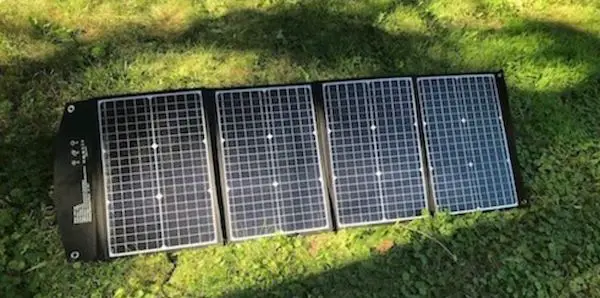
I use this solar panel to charge most of my portable power stations. In fact, I bought a second one to charge them even faster!
The Elecaenta panel has both grommets (mounting holes) and a kickstand to give you options for charging.
It also folds four times over and locks into place with two buckles for storage.
Overall, this solar panel is great for using in small spaces, which is why it’s my #1 pick for use in an apartment.
You can read my review of the Elecaenta panel to get a better picture of its capabilities.
2. ALLPOWERS 100W Portable Solar Panel
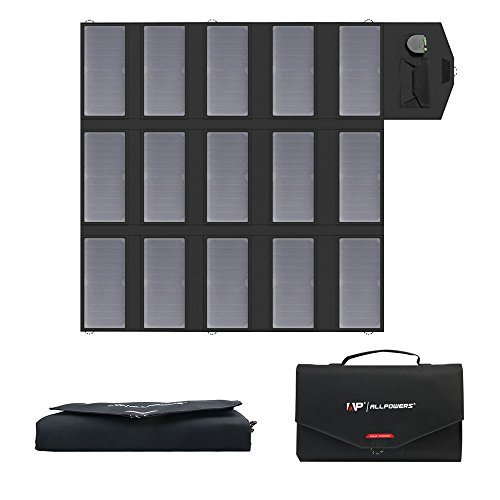
The ALLPOWERS portable panel offers a unique styling for efficient charging as well as storage. It has one of the smallest footprints when it’s completely folded, so you can keep it stowed away in a closet when not using it.
When using it to charge up your solar generator, it has mounting loops to hang it up outside.
If your apartment doesn’t have a balcony, you can hang it outside your window using its loops.
3. Renogy 200W Foldable Solar Panel
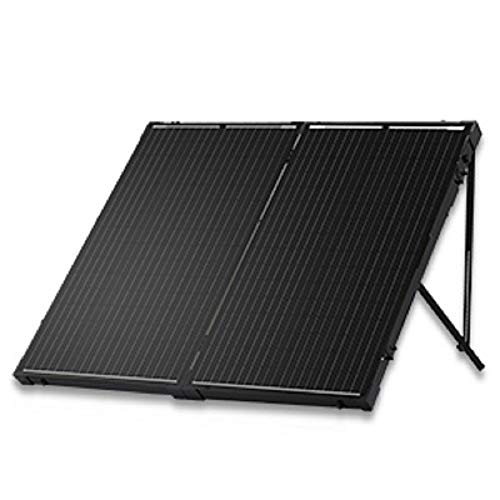
This is a larger panel than the others, both in input power and in weight. The Renogy 200W panel folds once over and uses its kickstand to charge up your power station.
Renogy has a wide variety of panels to choose from, and this one is one of their “suitcase-styled” models.
It’s not going to be as easy to store as the other models, but its output is about twice as much.
The ideal use of this panel for a condo or apartment is on a balcony.
Although it’s not my first choice, I wanted to show you this style in case you’re looking for a sturdy solar panel with a lot of power.
How to Hook up Solar Panels in Your Apartment
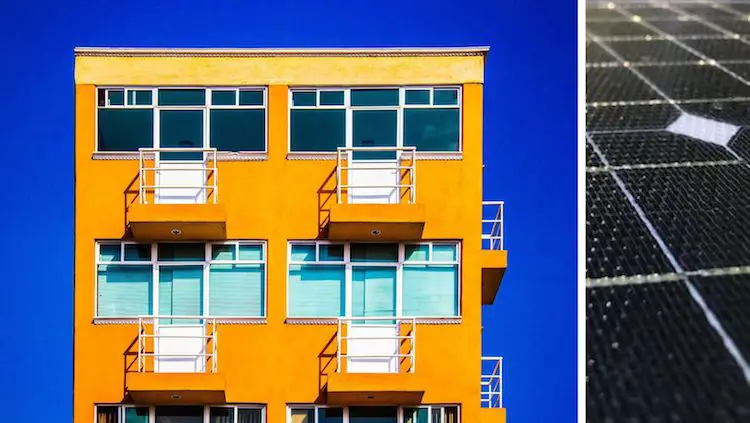
If you have a balcony, a solar panel with a kickstand can be used to charge your solar generator with relative ease.
However, you can also use the mounting loops/holes on these types of panels to hang them up to charge effectively. This can be used with or without a balcony.
1. Get the Solar Panel Mounted
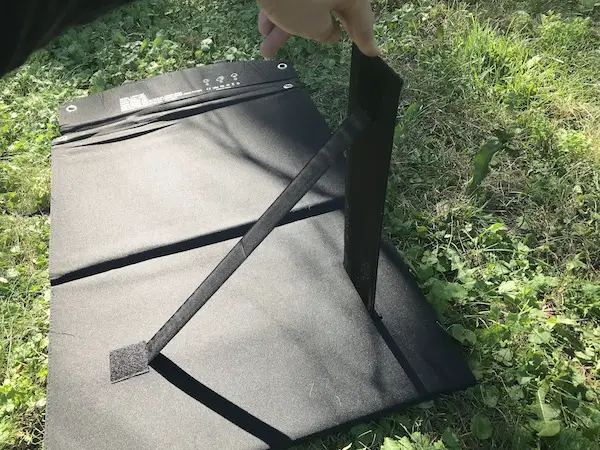
For use on a balcony, place the solar panel on a table with its kickstand to keep the balcony’s handrail from blocking sunlight to the panel
Without a balcony, you can use the mounting holes on the panel to hang outside your window
2. Use Extended Cables if Needed
If you have a large portable power station that you intend to solar charge, you may want to keep it in a location where it doesn’t need to be moved every time you need to charge it.
This can be done by getting solar panel extension cables. Some of these types of cables can give you up to an additional 30 feet of wiring.
However, note that the longer your cable is, the more power you lose from the panel. Typically, the power loss is not significant (5-10W max), but this depends on how long your cable is.
3. Connect to Your Power Station
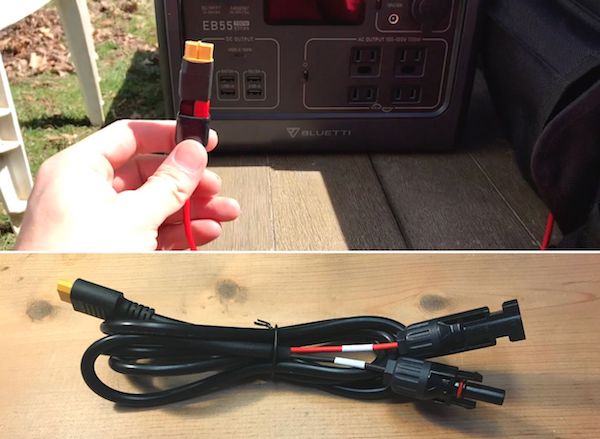
Lastly, simply connect your solar panel cable into your solar generator’s input port. Make sure that the solar panel’s output adapter is compatible with your solar generator’s input.
If it isn’t, then you would need to buy the appropriate adapter for a successful connection.